
California Supreme Court Resets Bail Rules
California Supreme Court Resets Bail Rules
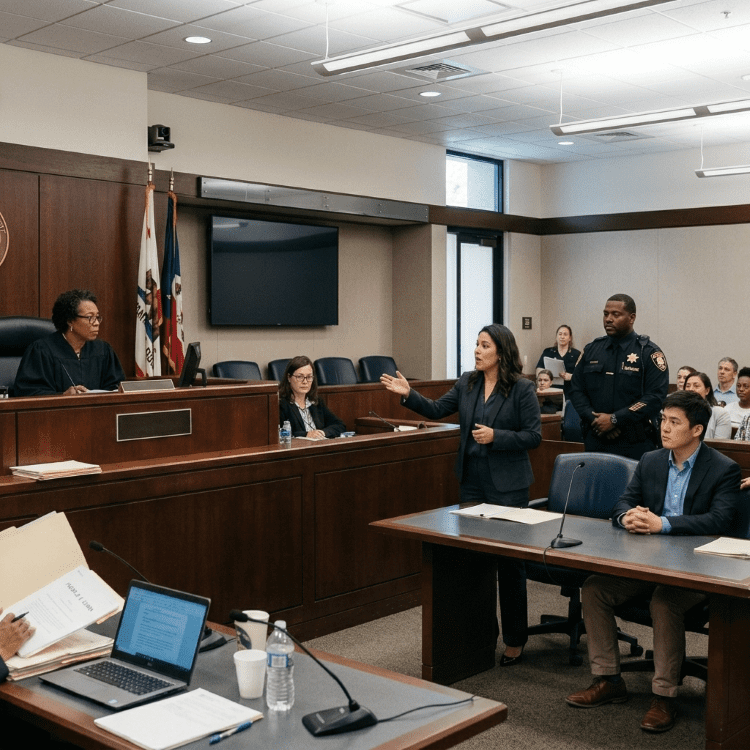 On April 30, 2026, the California Supreme Court issued its unanimous opinion in In re Kowalczyk, S277910, resolving foundational questions about pretrial bail that have divided California courts since In re Humphrey, 11 Cal.5th 135 (2021). It is immediately binding on every California court and significantly drives strategic defenses for clients arrested on nonviolent felony criminal offenses facing arraignment and bail review hearings.
What the Court Decided: Right to Release on Reasonable Bail
The California Supreme Court answered two questions about bail. First, it confirmed that Article I, Section 12 of the California Constitution — not Section 28(f)(3) added by Proposition 9 in 2008 — governs bail in noncapital cases. In re Kowalczyk, No. S277910, 2026 WL 1175320 (Cal. Apr. 30, 2026).
Section 12 requires that an arrested individual shall be released on bail unless criminal allegations involve a capital crime, acts of violence or sexual assault, and where threat of great bodily harm is likely (the enumerated exceptions). To handicap this constitutional right to bail for those arrested on any felony, Prosecutors have long argued that Section 28(f)(3)’s discretionary language (“may be released”) gave trial courts broad authority to deny bail outside of Section 12’s enumerated exceptions. The Court, however, rejected that reading, holding Section 28(f)(3) does not expand the grounds for detention beyond those in Section 12’s already enumerated exceptions. Id. at 13.
Second, and equally important, the Court reiterated and held that monetary bail must be set at a “reasonably attainable” amount given the defendant’s actual financial circumstance. Id. at 14 (Slip Op. at p. 32) (“The right to release on bail generally cannot be conditioned on financial payments that are set at amounts known to be insurmountable or objectively unachievable based on the defendant’s demonstrated financial circumstances.”) Courts cannot, as the opinion puts it, use “artificially high or objectively unattainable bail as an end run to effectuate pretrial detention where such detention is not authorized under section 12.” Id. Courts must consider one’s ability to pay alongside the efficacy of less restrictive alternatives when setting bail. Id. at 17.
The New Sequential Framework
The Supreme Court issued the following mandatory framework that trial courts must now work through before imposing any bail or detention order:
- The starting presumption is that pretrial liberty is the norm, not the exception.
- Detention of a noncapital defendant is authorized only under Section 12, subdivisions (b) or (c) where there is clear and convincing evidence of bodily harm to others or victims.
- Before any monetary bail is set, the court must find on the record, by clear and convincing evidence, that no nonfinancial conditions (GPS monitoring, check-ins, etc.) can adequately protect the state’s interests.
- If money bail is imposed, it must be reasonable under the totality of circumstances, including the defendant’s financial situation.
What This Means for Your Case
For clients facing nonviolent charges, In re Kowalczyk is immediately actionable. The prosecution can no longer rely on Section 28(f)(3) alone to justify detention or request punishing bail amounts that are unaffordable. Any bail order entered without the required Section 12 findings — or set without consideration of a defendant’s ability to pay — is constitutionally vulnerable.
It is important to review pending cases for constitutional compliance with regard to bail and be prepared to seek immediate hearings where existing orders fall short of the new standard. If you have questions about how Kowalczyk affects a pending matter, especially with matters in the San Francisco Bay Area criminal courts, contact an attorney immediately.

George Tran is an experienced trial lawyer with a proven record of success in high-stakes litigation and government investigations. As a former prosecutor with the U.S. Department of Justice and Santa Clara County District Attorney’s Office, he has led scores of complex criminal investigations into fraud, embezzlement, money laundering, tax evasion, and public corruption. He has tried over 30 cases to verdict in federal and state courts across the country and brings substantial experience navigating courtroom proceedings. Learn more here.
For more information
If you have been served with a subpoena to produce evidence or testify, contact our team today at at (415) 891-6210 for a complimentary consultation of your case.
contact us today
Delahunty & Nash LLP
1875 S. Grant St.
Suite 925
San Mateo, CA 94402
phone number


2026 Delahunty & Nash LLP | All Rights Reserved. | Site Map | Privacy Policy | Disclaimer